
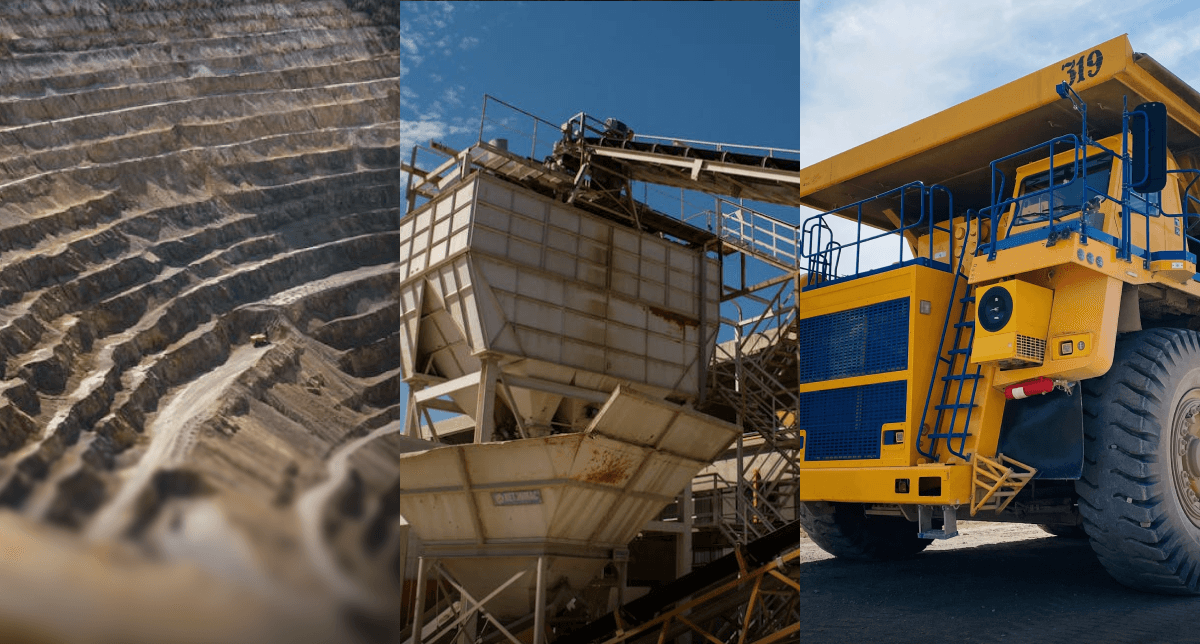
Mining companies with great products and dated digital presence have the most to gain from how B2B purchasing is shifting in mining. This report examines how mining buyers make decisions, where vendors are falling short, and what the companies winning these deals are doing differently. It draws on conversations with over 40 companies at Minexchange 2026, a review of 15 secondary sources on mining procurement, and an original audit of 30 mining company websites.
The Race Is Already Over
84% of B2B deals are often decided before the selling organization even knows a buying journey has started (6sense, 2025). The buyer has already researched solutions, talked to peers, stalked vendor websites, and formed a shortlist. Buyers remain anonymous for roughly 61% of their entire purchasing journey, before approaching a vendor (6sense, 2025).
By the time the formal bid arrives, the buying group has already identified the problem internally, researched solutions online, consulted peers, and narrowed their list to two or three vendors. Often, they've already picked favorites. The vendor who shaped the buyer's thinking during their anonymous research phase has already won.
Even in relationship-driven industries, the research that happens before the first call is getting longer. 61% of B2B buyers say they prefer finding information on their own terms before engaging a rep (Gartner, 2025). That doesn't mean relationships don't matter. It means your digital presence is the audition before the relationship starts.
The companies that win in this environment aren't the ones who respond fastest to the RFP. They're the ones who were present, visible, and credible long before the RFP was written.
Your Buyer Needs Ammunition
The person who likes your product is rarely the person who signs the check. Mining purchasing decisions run through a network of stakeholders, each with different priorities and risk tolerances. (Canadian Mining Journal, March 2026)
The person on-site who sees the value in your product has to sell it to everyone else. That internal sale is only as strong as the materials you give them. Comparison data for the finance team, safety credentials for the risk owner, and one-pagers a VP can read in two minutes. If your champion is forwarding a PDF that looks like it was made in 2014, that's the impression your company makes in the room where the decision happens.
Automotive, aerospace, and pharma already build for this: product configurators, ROI calculators, board-ready business cases. Most mining vendor websites still say "call for a quote." Meanwhile, 61% of B2B buyers prefer finding information on their own terms before engaging a rep (Gartner, 2025). The companies competing against bigger reputations don't close the gap by outspending. They close it by arming every stakeholder with exactly what they need to say yes.
The Communication Gap
There's a disconnect between how mining vendors present themselves and how mines evaluate them. Two gaps, both exploitable.
Language
Vendors talk specs. Technical buyers need specs. But those same buyers turn around and sell impact to other stakeholders: ROI, efficiency gains, reduced downtime. If your messaging stops at the spec sheet, the technical buyer is sold, but you've missed the chance to speak to everyone else in the room.
In our audit of 30 mining company websites, only 8 (27%) had clearly buyer-focused homepage messaging (Blueprint Studio, March 2026). The other 22 led with "world leader," "innovative solutions," "state-of-the-art." The companies that got it right speak to the buyer's problem, not their own brand story. Superior Industries opens with "Built for Your Production Breakthroughs." Haultrax positions around "easier, safer and more productive". Barr Engineering writes from the client's perspective: "shoulder-to-shoulder with you."
Mining companies lose an average of $187,500 per hour of unplanned downtime (Siemens, 2024). At those stakes, buyers aren't shopping for the lowest price. They're looking for proof that you're reliable. And they're forming that judgment through your website and materials long before they pick up the phone. If your materials look cheap, they assume your product is too.
Proof
The industry adage holds: "mines buy with their eyes" (Canadian Mining Journal, March 2026). Equipment running on-site, deployment maps, install videos, operator testimonials, documented uptime metrics, results from comparable operations with real numbers attached. Each of these is evidence that you deliver. They demonstrate quality and reputation before anyone picks up the phone.
Most mining companies don't capture or showcase this proof systematically. That's a wedge for any company willing to exploit it. Always capture, always publish. Social proof compounds.
The Silent Killer: Time
The deals that win are able to survive shifts in budget cycles, leadership, and commodity prices. Steve Gravel maps a five-phase buying process: concept, pilot, demo, integration, scale (Canadian Mining Journal, 2026). Each phase is a gate where the deal can stall.
The deals that survive look different from the ones that start conversations. Pilot credits that convert to scale-up discounts. Pay-for-performance arrangements. Equipment-as-a-service models and leasing options that shift purchases from CapEx to OpEx. These structures make the deal durable enough to survive five phases of validation, a budget freeze, or a champion leaving mid-cycle. The vendors who survive long sales cycles are the ones who design their commercial model to move with the buyer, not against them.
Generational Shifts and AI
The workforce is turning over, and how buyers find you is changing with it.
The Knowledge Drain
Boomers hold 22% of the mining workforce. Gen Z holds 10%, expected to double by 2030 (Farmonaut, 2025). When they retire, decades of vendor relationships, procurement knowledge, and informal peer networks leave with them. The replacement generation researches online first, expects transparent information, and is more hesitant to pick up the phone.
AI Is Picking Winners
94% of B2B buyers now use AI tools during their purchasing journey (6sense, 2025). This isn't a Gen Z trend: 66% of senior decision-makers use AI for supplier research (Magenta Associates, 2025). And just five brands capture 80% of top AI responses in any given category (Magenta Associates, 2025).
Zero of the 30 companies we audited have implemented llms.txt, the emerging standard for AI-driven discovery (Blueprint Studio, 2026). None have structured data designed for AI parsing. The good news: these fixes are cheap and fast. llms.txt takes hours to implement. Structured data and direct-answer content are straightforward. The cost of doing nothing is watching the next generation of buyers find your competitor instead.
Industry Benchmarks: 30 Websites Audited
We audited 30 mining company websites across equipment manufacturers, exploration firms, and technology companies. We scored mobile performance, accessibility, SEO, and content quality using PageSpeed Insights and DataForSEO. The goal: if a buyer researches you online first, what do they find?
The infrastructure is there. Most sites have sitemaps, proper robots.txt files, and average SEO scores. What sits on top of it is the problem.
- Mobile performance averaged 53 out of 100. Only 2 of 30 scored above 80. Most mining vendor sites are slower than they should be.
- Zero of the 30 companies have llms.txt - reducing AI discoverability and the next generation of search.
- Only 8 of 30 companies (27%) had buyer-focused homepage messaging. The other 22 led with "world leader," "innovative solutions," or corporate heritage.
- 15 of 30 were missing meta descriptions on key pages. That means Google writes your first impression for you.
- 22 of 30 were missing image alt text on key pages. Hurts accessibility, SEO, and AI comprehension simultaneously. One of the simplest fixes in web development.
The low-hanging fruit is enormous. Compress images. Write meta descriptions for every page. Add alt text to every image. Rewrite homepage H1s to lead with measurable outcomes instead of corporate positioning. Implement llms.txt. Each of these is achievable in days, not months.
Conclusion: Five Opportunities to Lead
Every section of this report points to the same structural reality: the mining purchase process has moved upstream. Deals are shaped during anonymous research, peer conversations, and AI-assisted shortlisting, long before an RFP. The companies that show up during that phase with clear, credible, buyer-focused materials will win disproportionately. Here are the five surfaces where that showing up happens.
1. Website. Your website handles the 70% of the buying journey that happens before anyone contacts you (6sense, 2025). The companies that invest in a digital presence that matches their product quality will look like the obvious choice before the first call. Lead with measurable outcomes, not corporate heritage. Show social proof, case studies with KPIs, and make your value is visible. Supplement "call for a quote" with self-service pathways: demos, downloadable one-pagers, ROI frameworks.
2. Sales process and proposals. Map the full stakeholder network, not just the person who took your call. Build materials that travel beyond the bid: one-pagers, comparison data, safety credentials, reference contacts. Frame pricing around total cost of ownership. Build in flexibility for budget freezes and phased rollouts. Design for the champion leaving mid-cycle. Plan for the 12 to 24 month timeline with touchpoints that keep the deal alive through priority shifts. Pilot credits, pay-for-performance, equipment-as-a-service, and flexibility into your deals.
3. Content and marketing. Show the work. Proof from real operations, not marketing copy. Social proof from comparable operations, documented with specifics: geology, fleet size, core challenges. Always be capturing: job site photos, operator quotes, install videos, uptime metrics. Every piece of content feeds the referral network and the anonymous research funnel simultaneously.
4. Referral engine. Referrals carry serious weight in a tight-knit industry, but a referral only opens the door. When someone hears your name from a trusted peer, the next thing they do is look you up. If what they find backs up the referral, it converts. If it doesn't, it dies. Make it easy for people to recommend you: documented results with real numbers, reference contacts who have agreed to take calls, a digital presence that matches your product quality.
5. Discoverability. SEO is table stakes. The next layer is AI: 94% of B2B buyers now use AI tools during their purchasing journey (6sense, 2025). As the workforce turns over and decades of vendor relationships retire with the people who held them, this channel matters more every year. Zero of the 30 companies we audited have prepared. Implement llms.txt, add structured data, publish direct-answer content. The first movers will own it.
These five surfaces aren't independent. They reinforce each other. A strong website feeds the referral engine. Good content shortens the sales cycle. Discoverability brings in buyers you'd never have met otherwise. The companies that invest across all five will compound their advantage.
This research was produced by Blueprint Studio, drawing on conversations with over 40 companies at Minexchange 2026, a review of 15 secondary sources on mining procurement, and an original audit of 30 mining company websites conducted in March 2026.